
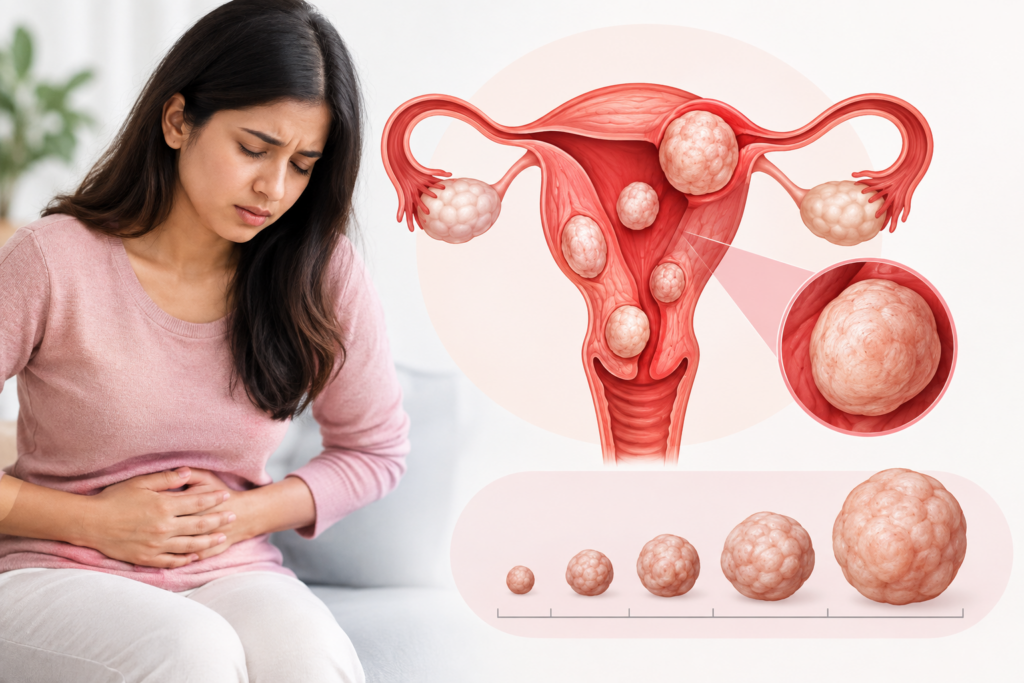
If you’ve recently been diagnosed with a fibroid, one of the first questions that probably comes to mind is: which size of fibroid is dangerous? It’s a fair concern — fibroids come in a huge range of sizes, from a few millimeters to as large as a grapefruit, and naturally, bigger sounds scarier. But size alone doesn’t tell the whole story.
Before we answer which size of fibroid is dangerous, it helps to understand what is uterine fibroids in the first place. Uterine fibroids are non-cancerous growths made of muscle and fibrous tissue that develop in or around the uterus. They’re incredibly common; many women develop them during their reproductive years, and a large number never even know it because fibroids don’t always cause symptoms.
Fibroids are generally grouped by where they grow:
Each type behaves differently, which is part of why size isn’t the only factor doctors look at when assessing risk.
The honest answer is: size matters, but it’s not the only thing that matters. A small fibroid in the wrong location can cause more problems than a large one sitting in a “safer” spot. Still, size is a useful general guide, and doctors do use rough size categories to decide how closely to monitor a fibroid.
General Size Categories
So when people ask which size of fibroid is dangerous, the general rule of thumb is that fibroids larger than 5–6 cm are more likely to cause symptoms that require medical attention but again, location plays a huge role too.
An intramural uterine fibroid, for example, grows within the muscle wall and can distort the shape of the uterus even at a moderate size, sometimes leading to heavier bleeding or pelvic pressure. A subserosal uterine fibroid, on the other hand, grows outward and can sometimes reach a fairly large size before symptoms appear, simply because it has room to expand into the pelvic cavity rather than pressing on the uterine lining.
This is why two fibroids of the same size can behave completely differently depending on whether they’re an intramural fibroid, a subserosal fibroid, or growing closer to the uterine cavity.
Regardless of size, certain uterine fibroid symptoms are signals that something needs medical attention. Common fibroids symptoms include:
If you’re experiencing several of these uterine fibroid symptoms together, it’s worth getting an ultrasound to check both the size and type of fibroid involved, since treatment decisions depend on both factors.
While many fibroids are harmless, certain warning signs suggest it’s time to see a doctor promptly:
These signs matter more than raw size measurements alone, because they indicate the fibroid is actively affecting your health rather than just being present.
Large fibroids — generally those over 8–10 cm — are more likely to:
That said, even a large subserosal fibroid may cause fewer bleeding-related symptoms compared to a smaller intramural fibroid, since it doesn’t distort the uterine cavity in the same way. This is exactly why doctors evaluate fibroids individually rather than relying on a single size chart.
To properly determine which size of fibroid is dangerous in your specific case, doctors typically use:
Regular monitoring is especially important for fibroids that are growing steadily, even if they haven’t yet reached a size associated with major symptoms.
Treatment isn’t always necessary — small, symptom-free fibroids are often just monitored. But when fibroids treatment is needed, options generally include:
Medication
Used to manage symptoms like heavy bleeding or pain, and sometimes to shrink fibroids temporarily before surgery.
Minimally Invasive Procedures
Surgical Options
The right treatment depends on the fibroid’s size, type (such as intramural fibroid vs subserosal fibroid), symptom severity, and whether future pregnancy is a consideration.
You should schedule an appointment if you notice:
Early evaluation helps your doctor determine not just the size but the overall risk profile of your fibroid, so treatment can be tailored appropriately.
pain, pressure, or other unusual symptoms, consulting a gynecologist can help determine the right next step. Dr. Nidhi Agrawal, an experienced gynecologist, provides personalized evaluation and treatment guidance based on your symptoms, fibroid size, and overall health. Timely consultation can help you understand your condition and explore suitable treatment options.